 English
 Arabic
 Chinese (Simplified)
 Chinese (Traditional
 Hindi
Hindi
 Italian
 Korean
 Portuguese
 Spanish
 Vietnamese
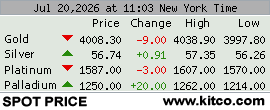
Today’s Gold Price per Ounce
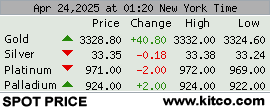
Gold prices change daily based on market conditions, making it important to understand the gold price today before buying, selling, or pawning gold. The Jewelers Coin & Loan Co. helps customers throughout Quincy, Greater Boston, and the South Shore better understand the value of their gold with accurate pricing information and honest evaluations.
Why Gold Prices Change Every Day
Gold trades on international markets from Monday through Friday, causing prices to fluctuate throughout each trading session. Some price movements are minor, while others reflect significant changes in global economic conditions.
Several market forces influence the current gold price, including:
- Inflation: Gold is often viewed as a hedge against rising prices.
- Interest rates: Changes in borrowing costs can affect investor demand.
- Economic uncertainty: Financial instability often increases demand for gold.
- Currency values: Movements in the U.S. dollar frequently impact gold prices.
- Global supply and demand: Mining production, jewelry demand, and investment activity all influence pricing.
- Central bank purchases: Governments buying or selling gold reserves can affect worldwide markets.
Gold Spot Price vs. Gold Value Today
While today’s spot price provides a benchmark, it doesn’t determine the value of every gold item. Since most jewelry is made from a blend of gold and other metals, its purity must be determined before its value can be calculated.
Common gold purities include:
- 10K Gold: Approximately 41.7% pure gold.
- 14K Gold: Approximately 58.5% pure gold.
- 18K Gold: Approximately 75% pure gold.
- 24K Gold: Nearly pure gold.
Understanding Gold Measurements
Gold is measured differently than everyday household products. Understanding these units helps explain how values are calculated. The most common measurements include:
- Troy Ounce: The international standard for precious metals, equal to approximately 31.1 grams.
- Gram: Commonly used when weighing jewelry and smaller items.
- Pennyweight (DWT): Frequently used by jewelers, with 20 pennyweights equaling one troy ounce.
What Determines Gold Value Today?
Two gold items with identical weights may not receive the same valuation. Several characteristics can increase or decrease an item’s overall worth. A professional appraisal considers:
- Karat purity: Higher purity generally contains more gold.
- Weight: Larger pieces typically contain more precious metal.
- Craftsmanship: Quality construction can improve resale value.
- Brand: Luxury designers often command premium prices.
- Diamonds and gemstones: Precious stones may increase overall value.
- Collectibility: Rare coins and vintage jewelry may be worth considerably more than melt value.
Should You Sell or Pawn Gold?
Whether selling or pawning is the better choice depends on your financial goals. Selling your gold is often the right option if you no longer want the item and prefer immediate cash. A pawn loan allows you to borrow against the value of your gold while keeping ownership, giving you the opportunity to redeem your item after repaying the loan.
Selling gold for immediate cash starts with a professional appraisal. The cash for gold process explains what to expect when receiving an offer. Both options begin with the same evaluation process, where purity, weight, market pricing, and condition are carefully examined before an offer is presented. Those who want to keep ownership while accessing cash may find pawning gold a better option.
Estimate Your Gold Before Visiting
If you’re curious about what your jewelry or bullion may be worth, a gold value calculator can provide a useful estimate before visiting the store.
The gold calculator estimates value using:
- Weight: Enter the item’s weight.
- Purity: Select the appropriate karat.
- Measurement unit: Calculate using the correct weight measurement.
What Types of Gold Can Be Evaluated?
We evaluate many types of gold items, from everyday pieces to collectible valuables. Different types of gold jewelry may vary in value depending on purity, weight, and overall condition.
Common examples include:
- Gold rings
- Gold necklaces and chains
- Bracelets and bangles
- Gold earrings
- Gold pendants
- Gold coins
- Gold bullion
- Designer jewelry
- Broken jewelry
- Scrap gold
- Foreign gold jewelry
- Dental gold
Gold Market Trends in 2026
Gold continues to play an important role in both personal wealth and global financial markets. While short-term price movements are expected, many investors continue to view gold as a long-term store of value during periods of economic uncertainty. Several trends continue to influence the gold market in 2026:
- Economic uncertainty: Market volatility often increases interest in precious metals.
- Inflation concerns: Gold remains a popular asset for preserving purchasing power.
- Central bank demand: Many countries continue adding gold to their reserves.
- Investment demand: Gold ETFs, bullion, and coins remain attractive to investors.
- Jewelry demand: Consumer demand continues to influence global supply and pricing.
- Geopolitical events: International developments can create rapid price fluctuations.
How Gold Is Evaluated
Every gold item is evaluated individually because no two pieces are exactly alike. A professional appraisal considers the amount of pure gold in the item, verifies authenticity, measures weight, and determines whether additional value exists beyond the precious metal itself.
The evaluation process generally includes:
- Authenticating the item: Checking stamps, hallmarks, and testing when necessary.
- Identifying karat purity: Determining the percentage of pure gold.
- Separating by purity: Organizing items by karat before weighing.
- Weighing the gold: Using certified scales for accurate measurements.
- Reviewing today’s gold price: Applying current market pricing.
- Evaluating additional value: Considering diamonds, gemstones, luxury brands, or collectible appeal.
Common Gold Stamps and Hallmarks
Many gold items include markings that indicate their purity. While these stamps provide useful information, they should not be considered proof of authenticity on their own. Some of the most common stamps include:
- 10K or 417: Approximately 41.7% pure gold.
- 14K or 585: Approximately 58.5% pure gold.
- 18K or 750: Approximately 75% pure gold.
- 22K or 916: Approximately 91.6% pure gold.
- 24K or 999: Nearly pure gold.
- 375: Commonly found on certain European 9K jewelry.
Why Accurate Gold Pricing Matters
Whether you’re planning to sell, pawn, insure, or simply understand the value of your collection, accurate pricing helps you make informed decisions. Knowing the current value of your gold can help with:
- Selling unwanted jewelry
- Comparing market conditions
- Planning a pawn loan
- Estate planning
- Insurance documentation
- Personal financial planning
Why Customers Throughout Greater Boston Choose Us
Customers throughout Quincy, Boston, and the South Shore choose The Jewelers Coin & Loan Co. because every evaluation is handled with honesty, transparency, and attention to detail. Some of the reasons customers continue to visit include:
- Experienced precious metal specialists
- Transparent evaluations
- Competitive offers based on current market conditions
- Private and confidential transactions
- No-obligation appraisals
- Licensed and established local business
- Fast, straightforward process
Check Today’s Gold Price or Get a Free Appraisal
Knowing the gold price today is a good starting point, but a professional appraisal provides a more accurate valuation based on factors such as purity, weight, and market demand. Every piece is evaluated individually to ensure you receive a fair and transparent assessment.